
Provost Studio Research / 2026 edition · Report 01
Communication is no longer
a feature of our environments.
It is their defining purpose.
The field guide to communication architecture—and the moment when physical space becomes an active medium.
01 / Executive summary
Space is now part of the communication system.
Organizations are expected to communicate continuously across physical rooms, livestreams, social channels, recorded media, internal platforms, and moments that will be viewed long after the space is empty. That changes the architectural brief.
A high-performing environment must support the people in it, the audiences beyond it, the content created through it, and the operating team responsible for keeping it useful. These conditions cannot be solved as separate layers added late in design.
The most powerful environments do more than support communication. They amplify it across audiences, channels, and time.
This report offers a practical model for aligning communication purpose, architecture, production, technology, brand, and operations from the beginning.
02 / The cultural and technological shift
The room has
become media.
Audiences are distributed. A room may hold fifty people while the content it produces reaches thousands. The remote audience is not secondary; it is part of the original design condition.
Communication is continuous. Leadership updates, training, market commentary, fan content, recruiting, launches, podcasts, and live events now belong to an ongoing rhythm rather than a handful of annual moments.
Production is becoming infrastructure. As professional media moves toward networked, software-defined workflows, environments must be planned for adaptability, timing, security, interoperability, and service—not only today’s equipment list.
03 / Why not simply hire an AV integrator?
Installation answers
how. Strategy must first answer
why, for whom, and what next.
An AV integrator is essential to a successful project. But integration is not the same as communication architecture. Provost defines the human, spatial, editorial, and operational system that the technology must serve—then coordinates the specialists required to deliver it.
Audience before equipment
Who must the organization reach, and what must those audiences understand, feel, or do?
Formats before fixtures
What content, events, conversations, and experiences must happen here every week?
Architecture before retrofit
How should structure, circulation, light, acoustics, depth, material, power, and data support those formats?
Operation before handoff
Who owns the environment, how quickly can it be used, and how will it evolve after opening day?
04 / The communication-architecture model
Five systems.
One environment.
Every design decision should be traceable to one or more of these connected systems.
Purpose
Business intent, audience, message, desired behavior, and measures of success.
Experience
Human movement, participation, access, comfort, energy, and the relationship between room and frame.
Content
Formats, cadence, talent, distribution, archive, reuse, and the operating workflow behind them.
Place
Architecture, brand, acoustics, lighting, infrastructure, material, and environmental performance.
Platform
Production, AV, IT, control, security, data, serviceability, and the roadmap for change.
When one system is designed in isolation, the others become expensive constraints.
05 / Six design principles
Spaces are designed.
Environments communicate.
These principles translate the model into decisions that can guide programming, design, procurement, commissioning, and operation.
Camera-aware
Compose the physical experience and the frame together. Sightlines, backgrounds, depth, light, reflectance, and movement are considered before a camera position becomes a constraint.
Brand-coherent
Translate identity into material, proportion, behavior, and atmosphere. The goal is recognizability across many formats, not a logo repeated behind every speaker.
Flexible
Plan for changes in audience, format, talent, technology, and operating cadence. Flexibility comes from infrastructure and spatial logic—not movable furniture alone.
Human-centered
Create conditions in which people can communicate naturally and confidently. Comfort, acoustics, eyelines, accessibility, and intuitive controls directly affect credibility.
Content-capable
Design around the formats the organization needs to produce: live events, town halls, interviews, podcasts, explainers, social content, training, and experiences.
Technically embedded
Coordinate power, data, rigging, lighting, acoustics, cooling, control, and service access early enough that technology becomes quiet, reliable infrastructure.
06 / Proof in practice
The idea becomes credible
when the environment performs.
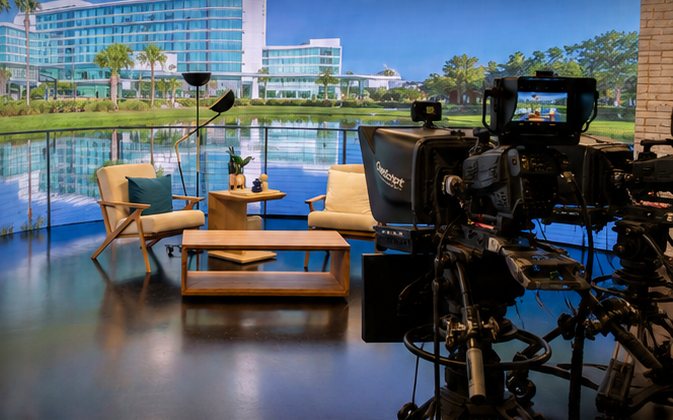
KPMG Lake House
A camera-ready campus production environment supports executive communication, training, live events, and branded content without leaving the organization’s own ecosystem.
View case study →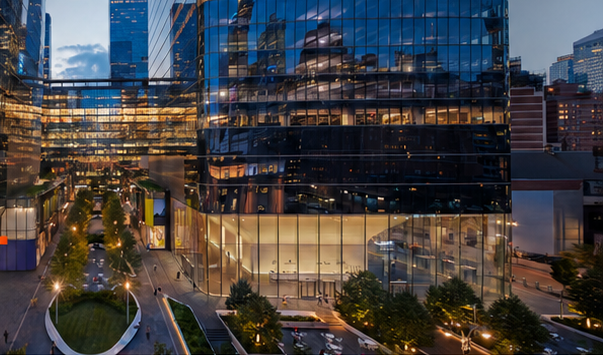
KPMG Two Manhattan West
Production infrastructure was designed into the headquarters so meeting, amenity, event, and lobby environments can perform in person and on camera.
View case study →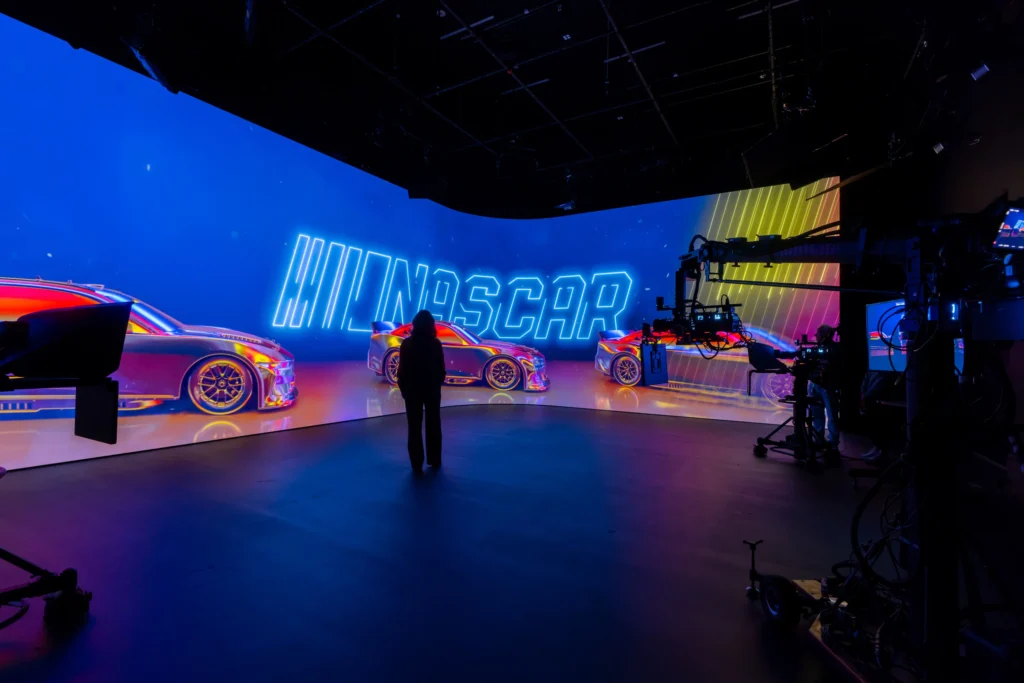
NASCAR
A flexible XR environment shortens the distance between live competition, analysis, talent, sponsors, and fans across a year-round content calendar.
View case study →
Atlanta United
A visible content and experience platform brings creation closer to the audience and makes media part of the physical fan journey.
View case study →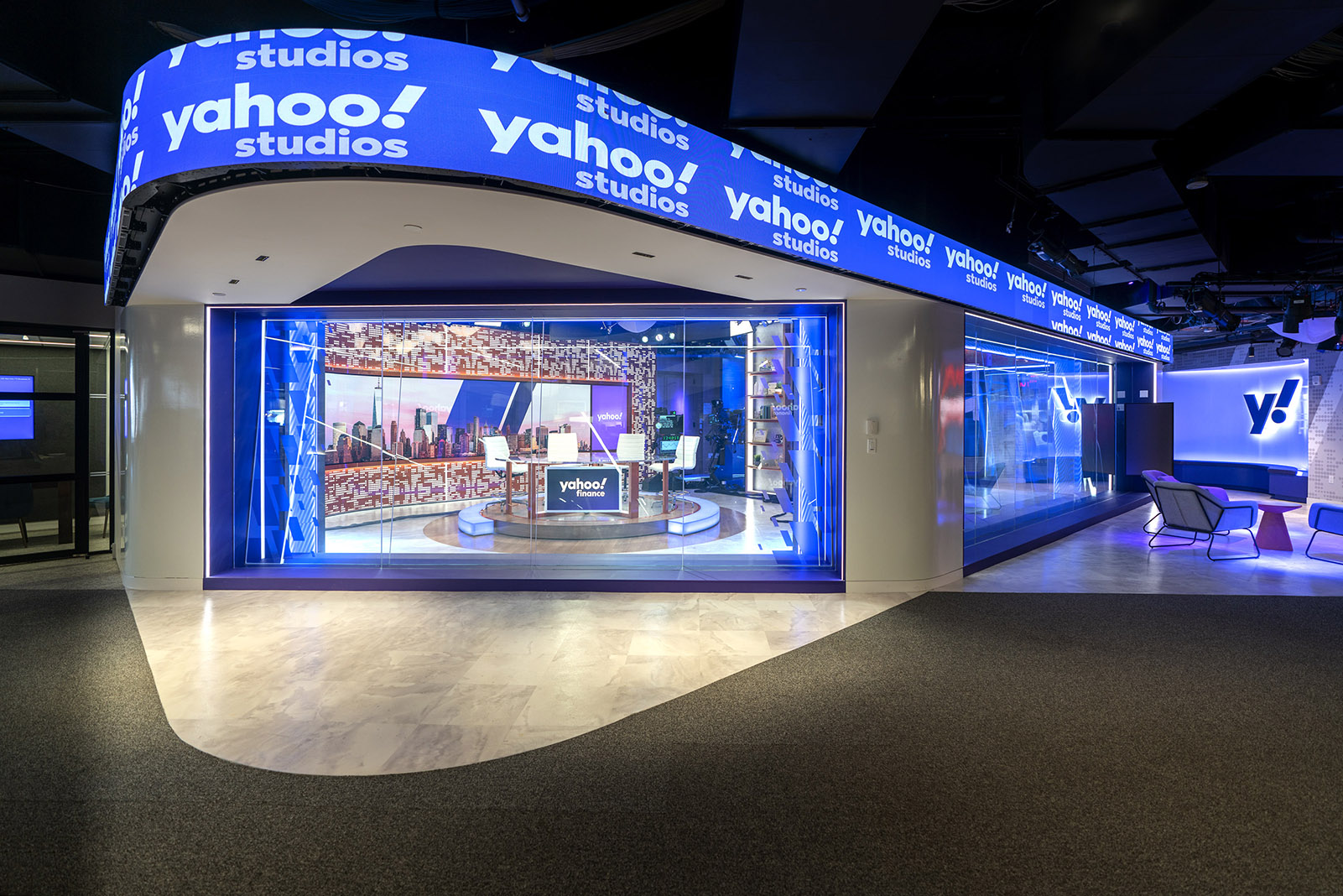
Yahoo Studios
Architecture, brand, production, and public presence work as one adaptable platform for timely, high-trust programming.
View case study →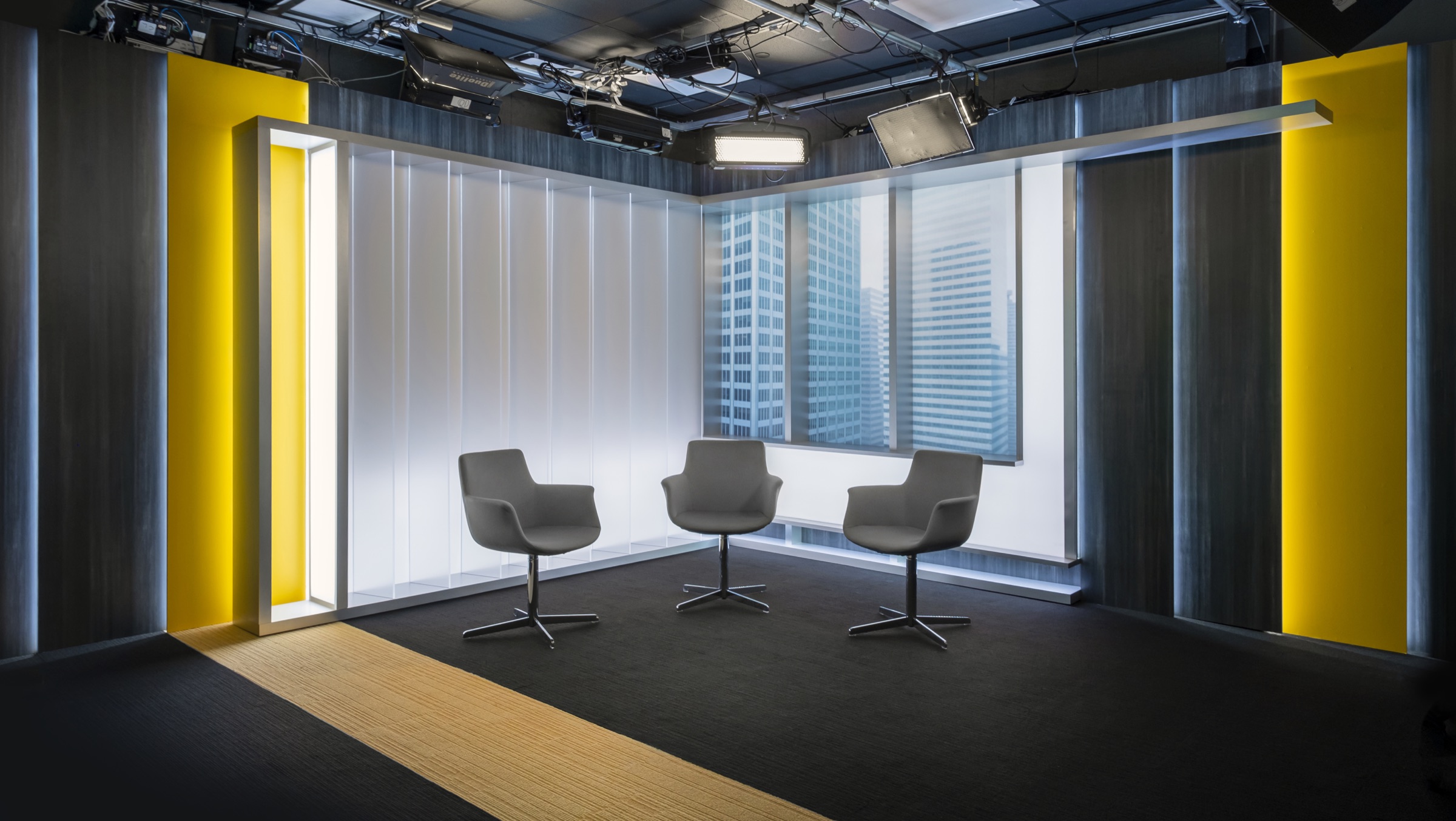
BlackRock
A connected family of broadcast and podcast environments gives institutional expertise a repeatable, human, camera-ready presence.
View case study →07 / Planning and implementation
Begin before the room
has already decided the answer.
The earlier communication requirements enter the process, the more efficiently architecture and infrastructure can support them.
- 01
Define the communication mandate
Align leadership on audiences, formats, operating cadence, measures of success, and what the environment must make possible.
- 02
Prototype the experience
Test frames, human movement, content modes, light, acoustics, control, and brand expression before the room is fixed.
- 03
Coordinate the system
Integrate architecture, production, AV, IT, security, acoustics, lighting, broadcast, and construction through one decision structure.
- 04
Build for operation
Commission workflows—not only equipment. Train teams, define ownership, document configurations, and rehearse real content formats.
- 05
Measure and evolve
Track utilization, speed to publish, format range, reliability, audience response, and the confidence of the people using the environment.
Budget around capability
Separate the durable infrastructure from rapidly changing equipment. Protect power, pathways, structure, acoustics, cooling, control, and service access before spending on visible technology.
Phase without creating dead ends
Define the complete future-state system, then sequence implementation so early phases remain useful and later phases do not require demolition.
Create decision ownership
Name accountable leaders for communication, space, technology, content, and operation. Resolve conflicts against the communication mandate—not departmental preference.
Plan the operating model
Determine staffing, scheduling, support, training, maintenance, security, content governance, and measurement before commissioning begins.
08 / Readiness diagnostic
Questions to ask
before you build.
If the team cannot answer these together, the project is not ready for an equipment list.
- Which audiences must this environment serve—in the room, live, and after the moment?
- Which recurring formats must be possible without a special production event?
- How quickly must the team move from an idea to a publishable result?
- What should feel unmistakably true of the organization in every frame?
- Which spaces must perform on camera while preserving their everyday use?
- Who will operate, schedule, maintain, secure, and evolve the environment?
- Which infrastructure decisions are difficult or expensive to change later?
- How will leadership know that the environment is creating value?
09 / Leadership brief
Five decisions leaders should make now.
Define communication as an organizational capability—not a room or capital purchase.
Bring content, brand, operations, IT, AV, and architecture into the brief together.
Design for the weekly rhythm of use, not only opening day and special events.
Fund the infrastructure that keeps future choices open.
Measure what the environment enables: speed, range, reliability, confidence, reach, and reuse.
Method / Provost Studio Research
Built from practice.
This report synthesizes recurring conditions observed across Provost Studio work in corporate communication, financial services, sports, broadcast, education, workplace, and emerging media environments. Project examples are presented as qualitative design evidence; client-confidential performance data is not claimed.
Selected source notes
- Microsoft and LinkedIn, 2025 Work Trend Index Annual Report: global research on the changing structure and pace of knowledge work.
- Microsoft Research, New Future of Work Report 2024: research synthesis on hybrid work and evolving workplace practices.
- AVIXA, Standard Guide for Audiovisual Systems Design and Coordination Processes: roles, tasks, and deliverables in professional AV design and construction.
- SMPTE ST 2110 suite: standards for professional video, audio, and data over managed IP networks.
Edition 1.0 · July 2026 · Prepared by Provost Studio Research. Sources accessed July 2026.
Download the report / 2026 edition
When Space
Becomes Media.
Get the complete report, including the communication-architecture framework, readiness diagnostic, project roadmap, and leadership recommendations.
The implication / The room is no longer passive
Lighting affects authority.
Spatial openness affects trust.
Backgrounds affect credibility.
The future belongs to organizations that design communication into the environment from the beginning.
Start a conversation →